
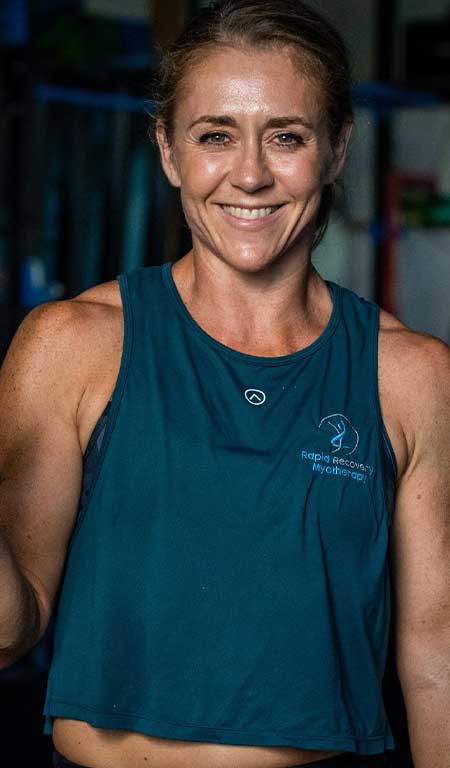

Meet Leanne
Remedial Massage Information
Years Of Experience
Treatments
Personal Therapist
What Is Remedial Massage? A Sunshine Coast Therapist Explains
I’m Leanne from Rapid Recovery Myotherapy in Buderim, and remedial massage is one of the most misunderstood therapies I offer. Most people assume massage is massage, that it’s all about relaxation and that one type is much the same as another. Remedial massage is something quite different, and if you’re dealing with muscle pain, tension, or a recurring physical complaint, understanding what it actually does might change how you approach your recovery.
Remedial Massage Is Therapeutic, Not Just Relaxing
Let me be direct about this. Remedial massage is a clinical therapy. It’s applied with a specific purpose: to assess and treat soft tissue dysfunction, reduce pain, restore mobility, and support the body’s natural healing process. It’s not a spa treatment. It’s not a luxury. For a lot of my clients, it’s a regular part of how they manage their body and stay functional.
That said, remedial massage and myotherapy exist on a spectrum, and they work best together. Where myotherapy extends into clinical assessment, movement analysis, dry needling, and corrective exercise, remedial massage focuses specifically on the soft tissue: the muscles, tendons, ligaments, and fascia. It’s hands-on, direct, and highly effective for a wide range of presentations.
What Remedial Massage Treats
Remedial massage works on the muscular and connective tissue system. In my clinic I use it to address:
- Muscle tension and hypertonicity, particularly in the upper trapezius, levator scapulae, and cervical paraspinals from prolonged desk work or device use.
- Delayed onset muscle soreness and training-related fatigue in athletes and active clients pushing high training loads.
- Lower back tightness and lumbar erector spinae overload, often driven by prolonged sitting, poor hip mobility, or repetitive loading patterns.
- Tension headaches originating from suboccipital restriction, upper cervical tightness, and scalene hypertonicity.
- Shoulder and neck tightness following postural strain, including forward head posture and protracted scapular positioning.
- Calf and posterior chain tightness in runners and cyclists, including gastrocnemius and soleus restriction contributing to Achilles load and plantar fascia irritation.
- General soft tissue maintenance for people who move a lot, sit a lot, or carry physical and postural stress in their daily lives.
If your body feels tight, heavy, or restricted and you’re not dealing with an acute injury or complex chronic condition, remedial massage is often exactly what you need.
The Techniques Used in Remedial Massage
A remedial massage session draws on a range of hands-on techniques applied with clinical intent. Depending on what your body presents with on the day, I may use:
Effleurage and Petrissage
The foundational strokes used to warm the tissue, increase local circulation, and begin reducing superficial tension before working into deeper layers.
Deep Tissue Massage
Applying sustained, focused pressure through the superficial muscle layers to reach deeper structures. This is particularly effective for chronic muscle guarding, dense fascial adhesions, and areas of longstanding tension that haven’t responded to lighter work.
Myofascial Release
Working with the fascial system to release restrictions and restore the tissue’s natural glide. The fascia, the connective tissue that surrounds and connects every muscle, bone, and organ in the body, can become thickened and restricted following injury, overuse, or sustained poor posture. Releasing it restores movement and reduces referred pain patterns.
Trigger Point Therapy
Locating and deactivating hyperirritable points within muscle tissue that are generating referred pain elsewhere in the body. A trigger point in your rhomboids might be causing that burning between your shoulder blades. A point in your piriformis might be sending pain down your leg in a pattern that mimics sciatic nerve irritation.
Stretching and Passive Mobilisation
Lengthening shortened muscle groups and taking restricted joints through range of motion to complement the hands-on soft tissue work.
For presentations requiring more specific intervention, I may also incorporate dry needling or cupping within the same session. This is one of the advantages of working with a qualified myotherapist who also delivers remedial massage: you’re not locked into a single modality when your body might benefit from a combination.
Remedial Massage for Athletes and Active People
I’m a CrossFit athlete, so I know this world from the inside. Training is cumulative. The sessions add up, the tissue fatigue builds, and if you’re not actively managing your recovery you’ll eventually hit a wall, whether that’s a soft tissue injury, a plateau in performance, or just persistent soreness that won’t clear.
Regular remedial massage is one of the most practical recovery tools an active person can use. It accelerates the clearance of metabolic waste from worked tissue, reduces delayed onset muscle soreness, maintains tissue extensibility under training load, and keeps your body moving the way it’s supposed to between sessions. I work with CrossFit athletes, runners, swimmers, and gym-goers across the Sunshine Coast who use remedial massage as part of their regular training support, not just when something goes wrong.
How Often Should You Get Remedial Massage?
This depends entirely on what you’re dealing with and what you’re asking your body to do. As a general guide:
- For active people in regular training, a session every two to four weeks is a solid maintenance baseline.
- For someone managing a specific soft tissue complaint or recovering from injury, weekly or fortnightly sessions may be appropriate in the early stages.
- For people with desk-based work and chronic postural tension, monthly sessions often make a significant difference to how they feel day to day.
I’ll always give you my honest recommendation at the end of your session. If I think you need more frequent treatment, I’ll tell you. If I think you can stretch it out, I’ll tell you that too.
Remedial Massage vs Myotherapy: Choosing the Right Treatment
The simplest way I can put it: if you have a specific injury, a chronic pain pattern that keeps returning, or a structural or movement problem that needs clinical investigation, myotherapy is the more appropriate starting point. If you’re dealing with muscle tension, training fatigue, postural tightness, or general physical maintenance, remedial massage will likely give you exactly what you need.
In practice, the line between them blurs often. Most of my sessions draw on both, because that’s what produces the best outcomes. As a practitioner qualified in both, I make that call based on what your body is telling me, not based on what you booked.
Private Health Rebates and Booking
Remedial massage with a qualified therapist is rebatable through most private health funds via HICAPS. I process your rebate on the day, so there’s no paperwork or waiting involved. Sessions are available in 30, 45, 60, and 90-minute durations.
I see clients from across the Sunshine Coast at my home-based clinic in Buderim, including people coming from Maroochydore, Mooloolaba, Caloundra, Coolum, and Noosa. Online booking is available and I’d love to help you feel better.
Find Our Studio
Location
4 Icarus Court, Buderim QLD 4556