
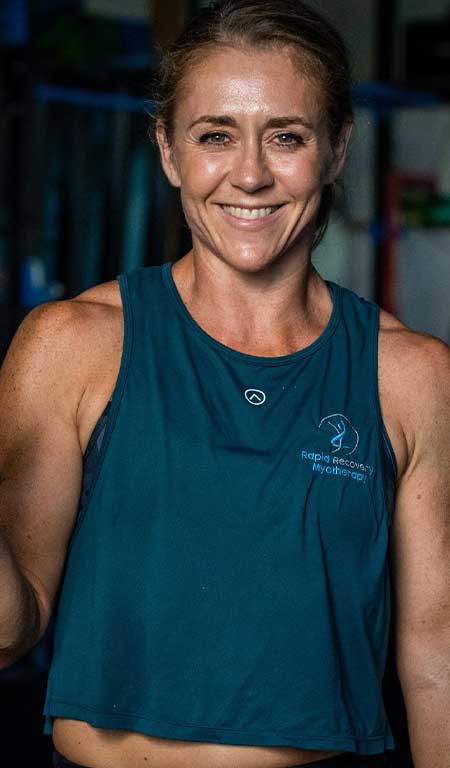

Meet Leanne
Myotherapy Information
Years Of Experience
Treatments
Personal Therapist
What Is Myotherapy? A Guide From Your Sunshine Coast Myotherapist
If you’ve landed here wondering what myotherapy actually is and whether it’s right for you, I’m glad you found me. I’m Leanne, the myotherapist behind Rapid Recovery Myotherapy here in Buderim, and I get this question all the time, especially from people who’ve tried everything else and are still in pain. Let me break it down for you properly.
Myotherapy Is Not Just a Massage
This is the first thing I want to clear up, because it’s the most common misconception I come across. Myotherapy is an evidence-based physical therapy discipline focused on the assessment, treatment, and rehabilitation of musculoskeletal pain and dysfunction. That’s a mouthful, so here’s what it means in practice: I’m not just working on how your muscles feel in the moment. I’m looking at why they’re behaving the way they are, what’s driving the pain, and what needs to change so it doesn’t keep coming back.
Remedial massage is a fantastic therapy and it plays a real role in what I do, but myotherapy goes further. It combines hands-on treatment with clinical assessment, movement analysis, and where needed, corrective exercise prescription. Think of it as structured problem-solving for your body.
What Does a Myotherapist Actually Treat?
Myotherapy addresses musculoskeletal pain and dysfunction across the entire body. In my clinic, I regularly work with clients presenting with:
- Acute and chronic lower back pain, including lumbar facet dysfunction, quadratus lumborum overload, and disc-related referral patterns.
- Cervical spine restriction and upper trapezius trigger point referral causing headaches, jaw tension, and TMJ dysfunction.
- Shoulder complex injuries including rotator cuff strains, subacromial impingement, and posterior capsule tightness.
- Hip and gluteal dysfunction, including piriformis syndrome and iliotibial band syndrome commonly seen in runners and cyclists.
- Lower limb overuse injuries such as plantar fasciitis, Achilles tendinopathy, and patellofemoral pain syndrome.
- Thoracic restriction and rib dysfunction, which often presents as unexplained mid-back tightness or difficulty breathing deeply.
- Nerve referral conditions including sciatic nerve irritation and brachial plexus tension patterns.
If you’ve been told your pain is “just muscle tightness” and you’re not getting better, there’s usually more going on beneath the surface. Finding that root cause is exactly what myotherapy is designed to do.
The Techniques I Use
One of the things that sets myotherapy apart is the range of clinical tools a qualified practitioner has access to. I hold an Advanced Diploma of Myotherapy and have been working in this field for 13 years, so I draw on a broad toolkit depending on what your body actually needs on the day.
Within a session I may use any combination of the following:
Myofascial Release and Soft Tissue Manipulation
Targeting the fascia, the connective tissue that wraps every muscle and structure in your body. When fascia becomes restricted following injury, overuse, or prolonged poor posture, it creates patterns of tension and pain that won’t resolve with rest alone.
Trigger Point Therapy
Working on hyperirritable nodules within muscle tissue that refer pain to other areas of the body. That headache sitting behind your eye might be coming from a trigger point in your sternocleidomastoid. That sharp pain in your heel might be referring from your soleus. Identifying and releasing these points is a core part of myotherapy practice.
Dry Needling
Dry needling uses fine filiform needles to release deep trigger points, reduce local muscle hypertonicity, and stimulate tissue healing responses. It’s one of the most effective tools I have for pain that hasn’t responded to other treatment, and I use it regularly with both acute and chronic presentations.
Myofascial Cupping
Myofascial cupping applies negative pressure to lift and decompress the fascia, increase local circulation, and reduce adhesions in the superficial and deep tissue layers. It works particularly well on thoracolumbar fascia restrictions and areas of chronic tissue congestion.
Joint Mobilisation
Using graded passive movement through restricted joints to restore range of motion, reduce pain, and improve mechanoreceptor signalling. This is especially useful for cervical and thoracic spine presentations.
Corrective Exercise Prescription
Hands-on treatment only gets you so far. If the movement pattern that caused the problem doesn’t change, the pain will come back. I give my clients specific exercises to address muscle imbalances, improve motor control, and build the resilience to stay out of my treatment room.
Who Is Myotherapy For?
The short answer is anyone dealing with pain or dysfunction that has a musculoskeletal origin. But in my clinic on the Sunshine Coast, I see two main groups of people.
The first is the active population: CrossFit athletes, runners, swimmers, cyclists, and gym-goers who train hard and need their bodies to keep up. I’m a CrossFit athlete myself, so I understand the demands you’re putting on your body, the way fatigue accumulates, and what it feels like when something isn’t right but you don’t want to stop training. I work to keep you moving, not to sideline you.
The second is people who have been dealing with a persistent, chronic condition that hasn’t resolved with other therapies. If you’ve had lower back pain for six months, if your neck has been stiff and sore for years, if physio and chiro helped temporarily but the problem keeps returning, myotherapy’s diagnostic approach may be exactly what’s been missing. I’m registered with the Australian Natural Therapists Association (ANTA) and carry HICAPS health fund rebates, so many of my clients receive a rebate through their private health cover on the day of treatment.
Whether you’re coming in with an injury that happened this week or a problem you’ve been managing for years, I approach every session the same way: find out what’s actually happening, treat it properly, and give you the tools to stay better.
What Happens in a Myotherapy Session?
Your first appointment starts with a thorough subjective assessment. I want to know about your pain, your history, your training load, your work setup, and anything else that might be contributing. I’m not going through a checklist, I’m building a picture.
From there I’ll conduct a postural and movement assessment, identifying compensatory patterns and restrictions. Then we get to work. Treatment is hands-on and tailored to what your body needs that day. I might use soft tissue work, dry needling, cupping, joint mobilisation, or a combination of all of them. By the end of the session I’ll tell you exactly what I found, what I did, and what I recommend going forward.
Sessions are available in 30, 45, 60, and 90-minute durations. For complex or long-standing conditions I generally recommend starting with a 60-minute appointment to allow adequate assessment and treatment time.
Myotherapy vs Remedial Massage: Which Do You Need?
Remedial massage is highly effective for muscle tension, recovery, and general maintenance. If you’re training regularly and want to keep your body feeling good, remedial massage is a brilliant tool. Myotherapy is the better choice when there’s a specific injury, a chronic pain pattern, or a structural or movement issue that needs clinical assessment and a treatment plan. In practice, the two often overlap, and as a qualified myotherapist I can deliver both within the same session depending on what you need.
Ready to Book?
I work from my home-based clinic in Buderim, serving clients from across the Sunshine Coast including Maroochydore, Mooloolaba, Caloundra, Coolum, and Noosa. Online booking is available, HICAPS health fund rebates apply on the day, and I’d love to help you figure out what’s actually going on.
Find Our Studio
Location
4 Icarus Court, Buderim QLD 4556